California moves one step closer to landmark biomass policy
AB 1666 (Rogers) Support Coalition:
California is facing an unprecedented wood waste crisis. Millions of tons of forest and agricultural biomass are piled and burned or left to decay each year, causing significant carbon and air pollution. Yet this challenge also presents an opportunity: by incentivizing a sustainable bioeconomy where these residues are collected and converted into low-carbon products, the state can avoid the above impacts while creating high-road jobs, accelerating technology innovation, and supporting wildfire risk reduction.
Yesterday, AB 1666 (Rogers) passed out of the Senate Natural Resources and Water Committee, moving California one step closer to establishing its first-ever comprehensive statewide biomass policy framework. The bill passed out unanimously (7-0) with support from a broad coalition of environmental organizations, local and regional economic development groups, air pollution control districts, a Tribal government, and biomass technology developers. As the bill moves to Senate Appropriations, we highlight the opportunity to allocate available Proposition 4 funding to support its implementation.
California's wood waste crisis
California policymakers have increasingly recognized the state's escalating wood waste and wildfire crises. In its 2022 Scoping Plan, CARB identified the need to collect and convert forest and agricultural biomass via non-combustion technologies into low-carbon products, including durable wood products such as mass timber, zero-carbon fuels such as biomethane and hydrogen, and carbon dioxide removal (Figure 1). More recently, both the SB 254 Catastrophe Resiliency study and the California Wildfire and Forest Resilience Task Force's Draft Action Plan highlighted the key opportunity for biomass utilization to help pay for forest treatments and reduce wildfire risk. Finally, multiple California Jobs First plans identify the bioeconomy as a priority opportunity for regional economic development.
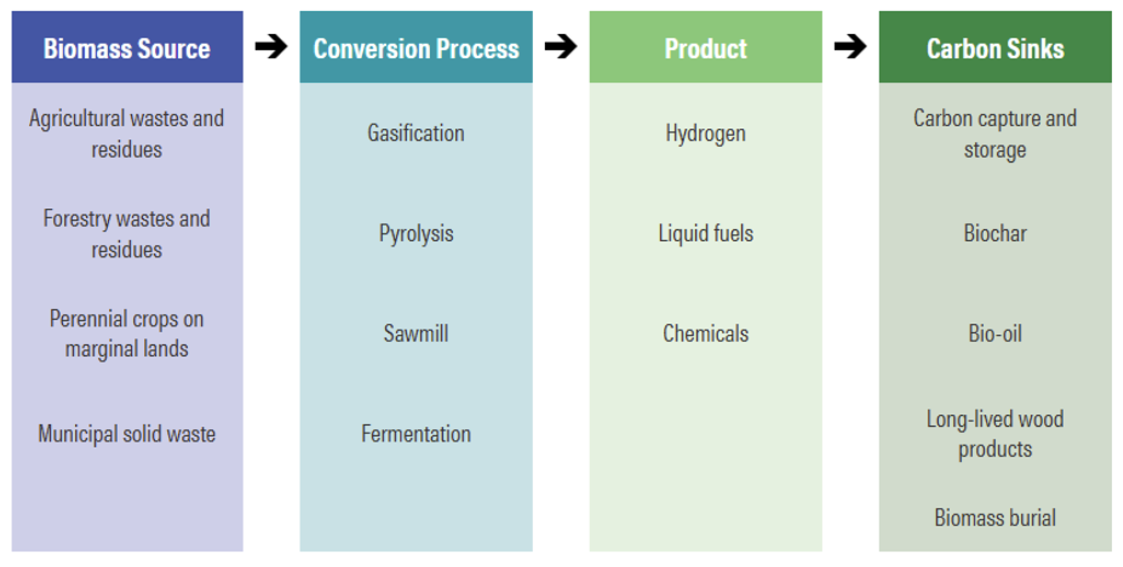
Figure 1: Non-exhaustive summary of non-combustion technology options consistent with CARB's Scoping Plan. This diagram is illustrative only--for example, it should be noted that municipal solid waste (MSW) is outside the scope of AB 1666. Source: World Resources Institute
While California has identified the strategic importance and need to expand biomass utilization, key implementation barriers remain. AB 1666 seeks to address these through targeted reforms and incentives that remove barriers to project development and support a sustainable bioeconomy consistent with the state's climate, wildfire, and economic development goals.
AB 1666: Biomass Innovation Parks Act
AB 1666 (Rogers) would establish a series of supportive policies and framework to scale a sustainable bioeconomy in California. Specifically, the bill would do all of the following:
Biomass Innovation Parks: Directs CNRA to establish one or more Biomass Innovation Parks as regional hubs that bring together public and private entities to commercialize and scale non-combustion biomass technologies, including mass timber, low-carbon fuels, and biomass carbon removal.
Grants and financing program: Establishes a dedicated grants and financing program at CNRA to support development of the parks.
Regional wood waste assessments: Directs CNRA, with LCI and CAL FIRE, to assess the availability and characteristics of wood waste across different regions, providing greater certainty around the feedstock available to support new projects.
Biomass tracking: Directs CNRA, with LCI and CAL FIRE, to establish a system to trace and authenticate the origins of forest biomass, providing guardrails to ensure the sustainability of supply.
Long-term feedstock supply: Directs CNRA, with LCI and CAL FIRE, to support efforts to facilitate and aggregate longer-term biomass supply across federal and non-industrial private lands. Reliable supply is critical to reducing development risk, as uncertainty around future feedstock remains a significant obstacle to financing new facilities.
Next steps
Biomass has proven to be a very challenging issue area to make progress on in California. AB 1666 includes targeted reforms and incentives to develop and scale non-combustion technologies consistent with existing state plans and goals across the energy, resource, and climate agencies. It builds on the leadership of the California Wildfire and Forest Resilience Task Force, who convened a working group to develop and refine many of these policies in recent years. The bill is supported by a broad coalition, including environmental NGOs, community groups, and private developers (see below).
AB 1666 now heads to Senate Appropriations, which will be convened after the summer recess in early August. As policymakers plan to negotiate environmental and climate program budget allocations at this time, there is an opportunity to allocate available Proposition 4 funding for non-combustion biomass programs ($40M) to support enactment of AB 1666. This would ensure that CNRA can establish the Biomass Innovation Parks flagship program in earnest as well as support implementation of other key policies in the bill. For more information, please contact Sam Uden (sam@netzerocalifornia.org).