Despite strong progress in recent years, California still risks falling well short of its 2030 and 2045 climate goals. And now, as the state faces a projected $18 billion budget deficit, a key question relates to what climate action might look like in 2026.
In this blog, we show there is no shortage of no- and low-cost policy reforms that could make for another milestone year of pragmatic climate action in California. We highlight nine opportunities focused on improving the efficiency of existing programs and processes as well as leveraging small amounts of funding to establish key standards that are essential to meeting the state's climate goals:
Permitting: Two opportunities, including: (i) identify reforms that reduce lead times to new electrical transmission; and (ii) expedite permitting for clean generation projects eligible for sunsetting federal tax credits established under the Inflation Reduction Act;
Data centers: Establish standards that require data centers to pay their fair share in grid infrastructure costs, participate in load-shifting programs, and ensure projects meet high environmental requirements to support grid expansion and ratepayer affordability;
Cap-and-invest: Two opportunities, including: (i) quickly initiate and progress the cap-and-invest rulemaking to support a steady increase in allowance prices and recovery in auction revenues; and (ii) align available auction revenues with the state's latest climate plans to ensure that GGRF investments support the state's climate goals;
Transmission Infrastructure Accelerator: Ensure rapid implementation of this key new program established via SB 254 (Becker, Petrie-Norris) that would provide public financing and targeted development support for high-priority transmission, saving ratepayers up to $3 billion per year;
Wildfire prevention: Two opportunities, including: (i) examine the potential to reallocate a portion of the roughly $10B in annual wildfire expenditures spent primarily on firefighting and ignition reduction towards home hardening, defensible space, and forest treatments; and (ii) incubating a sustainable forest bioeconomy to help pay for forest treatments and generate tens of thousands of high-skilled, advanced manufacturing jobs in rural and tribal areas;
Carbon removal: Establish new policies to address the lack of infrastructure that is limiting carbon removal deployment, such as via alternative models currently being implemented in the UK that incentivize public interest, low-cost CO2 transport and storage development.
A budget deficit provides a unique opportunity for the state to prioritize climate policies that are often neglected during a favorable budget cycle – where there is instead an emphasis on new and large-scale public investment initiatives. California can continue to demonstrate that climate action and economic development go hand-in-hand with a portfolio of pragmatic, efficient and resourceful climate policies.
* * *
California's continued leadership on climate could not come at a more pivotal time. As the federal government officially withdraws from the Paris Agreement, and multiple countries grapple with an array of social, technical, financial, and political obstacles to transitioning their economies to clean energy, California is demonstrating that climate action and economic development can go hand-in-hand.
However, we should be clear eyed about what it will take to keep delivering on our ambition. The state achieved its first major climate target – reducing emissions to a 1990 baseline level as called for in AB 32 – in 2014. This was an impressive six years ahead of schedule. Over the last ten years, the state has reduced emissions a further 16%, from 431 Mt to 360 Mt. The state's 2030 target is to reduce emissions by 40% compared to the 1990 baseline level. This means we need to reduce emissions an additional 24% in only five years, which is three-times as fast as the past decade of climate action.[1] This faster pace then needs to be sustained all the way to 2045 to meet the state's net-zero emissions goal.
Although it might seem counterintuitive, a budget deficit provides a good opportunity to do this. A budget surplus often lends itself to a climate agenda that is long-term and investment-oriented, such as providing grants for new technology development. In contrast, a budget deficit can be used to focus on no- and low-cost policy reforms that provide immediate climate benefits – which is exactly what the state needs today – such as by improving the efficiency of existing programs and expenditures, unlocking fast-moving private capital with non-monetary incentives, and similar strategies. In this blog, we show that there is no shortage of these opportunities that the state can leverage in support of its climate goals.
Policy opportunities
We highlight nine opportunities across six issue areas that could form a high-impact climate agenda in 2026, including: (i) permitting reform; (ii) data center standards and incentives; (iii) Cap-and-Invest implementation; (iv) Transmission Infrastructure Accelerator implementation; (v) wildfire prevention and the forest bioeconomy; and (vi) carbon removal planning and infrastructure deployment.
1. Permitting reform
Increasing the speed at which clean energy projects can be delivered is a clear opportunity to deliver near-term climate benefits. It is also an opportunity to deliver potentially significant affordability benefits – as longer lead times result in increased project costs passed on to consumers. Some progress has been made in recent years, including notably reforms to transmission permitting at the CPUC as well as the establishment of the AB 205 opt-in permitting process for eligible clean generation at the CEC. However, key opportunities remain on the table and could be considered by state leaders.
Figure 1 summarizes transmission development lead times from 2002-2024 in California. The chart shows that there are two key delay points: (i) the amount of time it takes developers, primarily IOUs, to submit their draft permits to the CPUC; and (ii) permit review at the CPUC. The recent rulemaking at the CPUC appeared to only take moderate steps to address (i) and did not examine certain reform options, such as expedited review if developers submit draft permits quickly. Additionally, there is scope to consider a 'stick' reform where, if certain policy-driven IOU transmission projects are shown to be excessively delayed, these would then be opened up to competitive bid. In terms of (ii), while the CPUC has launched a pilot program to trial faster permitting, there is potential to significantly ratchet the ambition, such as by setting a shot clock for the agency to complete its review – or otherwise projects receive automatic approval. New York recently passed a law (RAPID Act) that set 60- and 120-day shot clocks for different stages of its transmission permitting review. Stakeholders could also consider strengthening the requirement that if CAISO determines a transmission project as needed, that the CPUC should accept this determination – eliminating uncertainty and duplicative analysis.
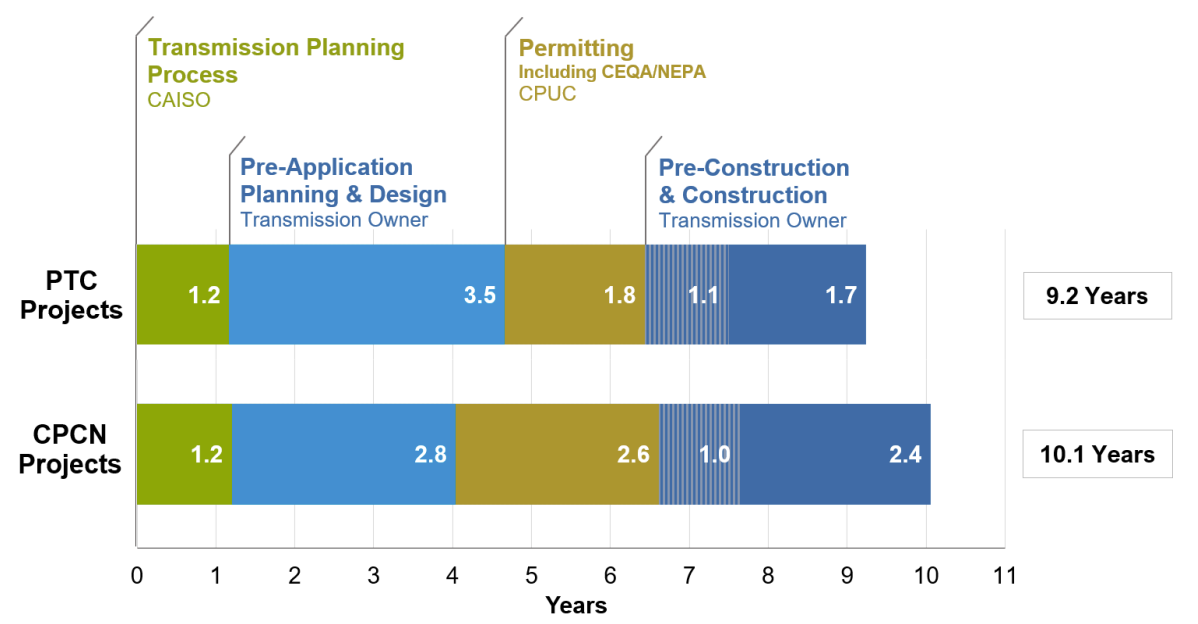
Figure 1: Summary of the average time periods to transmission development for completed projects in California from 2002-2024, including Permit-to-Construct (PTC) (50-200 kV) and Certificate of Public Convenience and Necessity (CPCN) (200+ kV) projects. The analysis finds that a majority of IOU transmission projects are delayed, including by up to 10-years, compared to their target in-service date. Source: Public Advocates Office.
A second key permitting reform opportunity relates to clean generation projects eligible for federal tax credits under the Inflation Reduction Act (2022). Following the One Big Beautiful Bill Act (2025), the time window to obtain these credits was significantly reduced. The CPUC is already taking steps to address this issue, including by increasing its clean energy procurement order for 2029–2032. However, the OBBBA requires that projects “begin construction” by mid-2026 to be eligible. Although this definition is broad and includes, for example, spending 5% of total project costs (without physically undertaking construction), legal and practical uncertainty remains if projects cannot legally start work due to pending permits. State leaders should explore ways to expedite permitting so that, where possible, tax credit-eligible projects have these approved before the deadline. This includes a particular focus on interconnection queue bottlenecks, which is a step towards achieving the relevant permit approval.
2. Data centers
Rapid near-term load growth driven by data centers is a phenomenon sweeping across the US. Many first-mover states that embraced data centers are now grappling with a consequence of residential consumers footing the bill for needed grid expansion – putting upward pressure on rates (Figure 2). Data centers extreme demand for power has also driven an expansion in fossil fuels, notably natural gas. There are also concerns regarding the environmental impacts of data centers, with some processes requiring significant amounts of water to support operations. PG&E alone has a pipeline of data-center load applications totaling more than 10 GW. As part of its 2025 planning process, the CEC estimates that up to 5 GW of additional capacity statewide would be needed to meet data-center demand in the early 2030s. For reference, the state's current peak load is roughly 50 GW, meaning an additional 5 GW of demand from data centers alone would represent about a 10% increase in peak capacity.
Despite the negative experience of some states, multiple reports suggest that data centers have the potential to positively transform the grid, including in terms of clean energy, affordability, and reliability. The key is that a policy framework is set in place to guide these outcomes. California could pioneer a Clean Data Centers policy that seeks to incentivize data centers in the state, provided they meet a certain threshold of standards. These could include, but are not limited to: data centers paying for all grid connection costs (including if the data center ceases operations sooner than anticipated); utilizing 100% clean energy; participating in load-shifting programs to reduce peak demand; and meeting environmental standards in terms of water use and other potential impacts. As an incentive, data centers could access an expedited permitting pathway, amongst other potential reforms. Legislation would be required to establish this framework. Policymakers may also consider providing further direction at the CPUC, where the Commission is reviewing a PG&E proposal to streamline a huge volume of data center load applications under a new tariff (Electric Rule 30). While this is reasonable in concept, the proposal itself appears to fall significantly short of the above protections, exposing ratepayers through uncertain refund mechanisms and a clear potential for cost-shifting into the rate base (CalAdvocates, TURN).
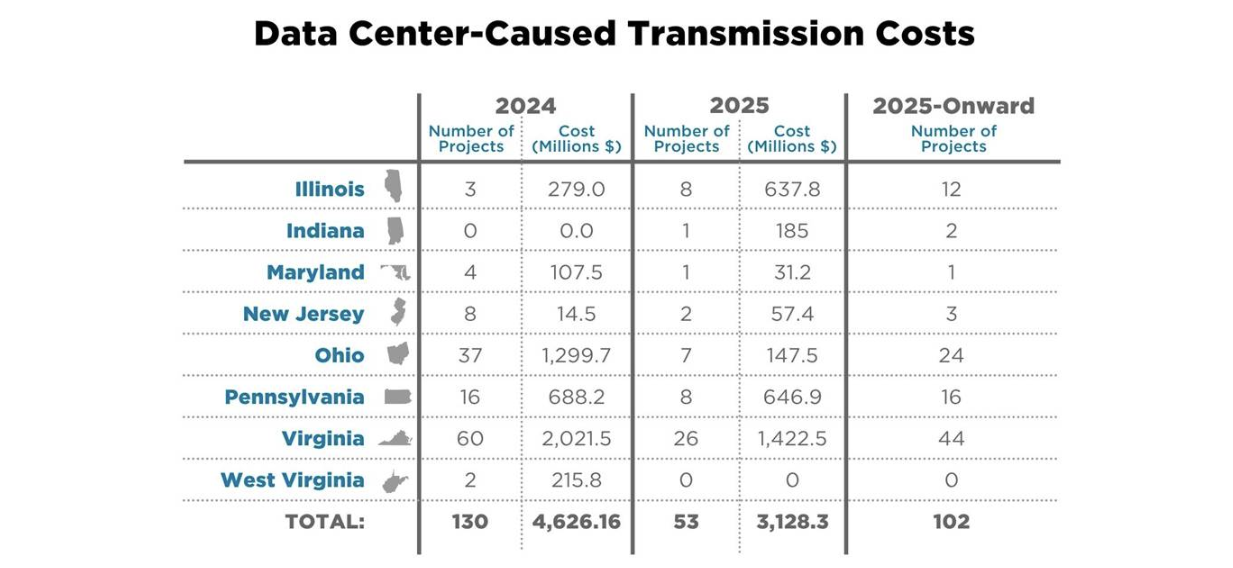
Figure 2: Summary of the growing transmission costs caused by data centers within PJM, amounting to $7B over two-years alone. Source:Union of Concerned Scientists
3. Cap-and-invest
California's cap-and-invest program (formerly cap-and-trade) functions as a key pillar and backstop of the state's climate policy portfolio. While the program was set to expire in 2030, AB 1207 (Irwin) reauthorized the program to 2045. In the face of the Trump Administration's efforts to undermine the program, this law asserted California's commitment to climate action. However, targeted follow-up reforms are needed to improve program performance and drive cost-effective emission reductions.
First, it is important that CARB, as soon as possible, initiate its rulemaking and provide clarity regarding the degree to which it intends to ratchet the program and the amount of allowances that will be available going forward. The most recent C&I auction (November 2025) showed a marginal reduction in allowance prices – from $28.76 to $28.32. This is despite the Governor signing AB 1207 into law in September. This suggests market participants are holding out for more clarity regarding planned allowance supply. The main implication of a depressed auction is a loss of revenue to invest in climate programs. Clean and Prosperous California calculates this amount at $767 million from the November auction alone. This adds to the more than $3 billion in lost revenues over the past 18-months.
Second, is that lawmakers should critically analyze and revise current Greenhouse Gas Reduction Fund (GGRF) programs, which are substantially misaligned with the state's climate goals. The main GGRF allocations have been unchanged since 2014 – before the state even had a 2030 climate plan and goal (SB 32, 2017), let alone a 2045 plan and goal (AB 1279, 2022). The result is that the vast majority of auction proceeds are being invested in programs that are not only a) highly cost-ineffective, requiring more than $1,000 to reduce one ton of carbon emissions, but also b) not even relevant to achieving the state's climate goals. A simple cross-walk between the current GGRF portfolio and the 2022 Scoping Plan shows this mismatch clearly. Although SB 840 (Limon) retained some of these allocations, as auction revenues recover policymakers should expect to have billions to allocate each year towards new programs, representing a key new opportunity to improve overall performance.
Figures 3 and 4 contrast alternative GGRF investment strategies. Figure 3 shows current allocations to date. Figure 4 shows a potential new investment strategy that prioritizes climate and energy affordability objectives (i.e., an "Affordable Net-Zero" investment strategy). For more information, see: Analysis and recommendations to reallocate GGRF to achieve California's climate and energy affordability goals.
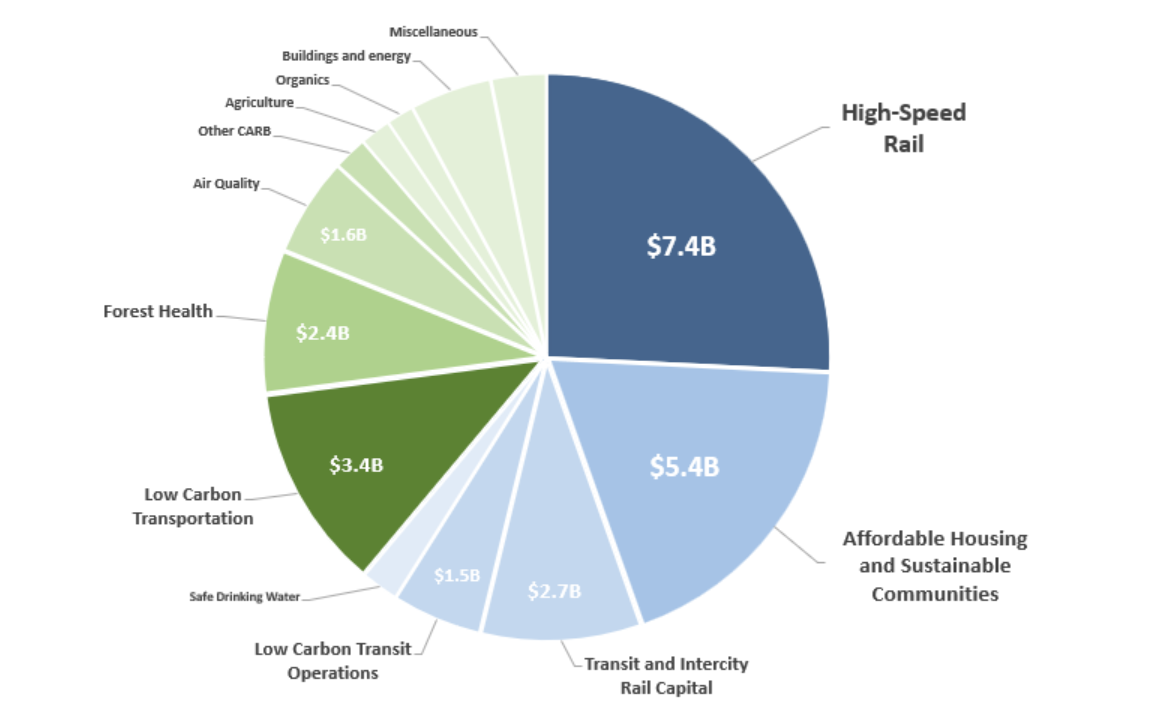
Figure 3: Summary of allocations from GGRF to date ($30B), which lacks a coherent objective and structure. Notably, all of the blue programs, and many of the green programs, are not identified as priority climate actions in the 2022 Scoping Plan. Source: CCI Annual Report and CARB
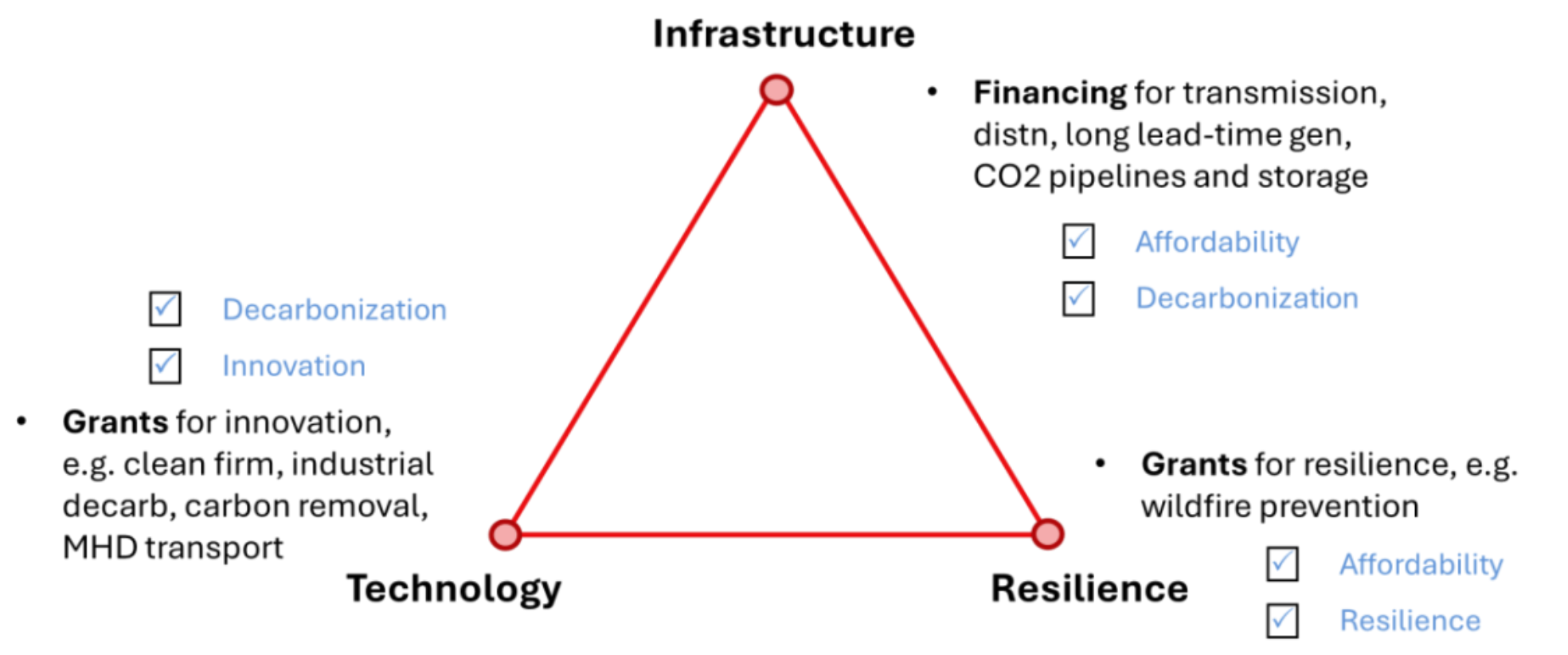
Figure 4: Summarizes a potential new allocation structure that prioritizes climate and energy affordability objectives via three main investment pillars: (i) low-cost loans for clean energy infrastructure, such as transmission and long lead-time generation; (ii) grants for technology innovation, such as enhanced geothermal and carbon removal; and (iii) grants for resilience, notably wildfire prevention.
4. Transmission Infrastructure Accelerator
California has some of the highest electricity rates in the nation, with a key driver being how IOUs finance and develop transmission. Without intervention, this issue was anticipated to become significantly more problematic as the state expands its grid to meet growing energy demand, reliability, and clean energy goals. However, via SB 254, a key pillar of the 2025 climate and affordability package, the Governor and Legislature developed a policy to address this concern by creating a new Transmission Infrastructure Accelerator to facilitate low-cost public financing, potential public ownership, and targeted development support for priority large-scale projects – facilitating ratepayer savings of up to $3 billion per year (Figure 5).[2]
However, these savings can only be realized if the policy is successfully implemented – and the sooner the better for ratepayers. State leaders should consider options to expedite Accelerator implementation, including by ensuring coordination across the key agencies (GO-Biz, CAISO, and IBank), ensuring sufficient capacity within the key agencies to implement the policy, and identifying transaction consultants as needed to provide support services. Note that as the Accelerator policy drives savings simply by changing the financing and (potentially) ownership of projects, which can continue to be developed by private companies, a nominal amount of staff time to legally structure and expedite a handful of projects through existing agency processes is the only real need. Early-stage capital for projects has already been established via Proposition 4 ($325M) and cap-and-invest (5% allocation of IOU-consigned allowances for five-years, estimated to total $2B).
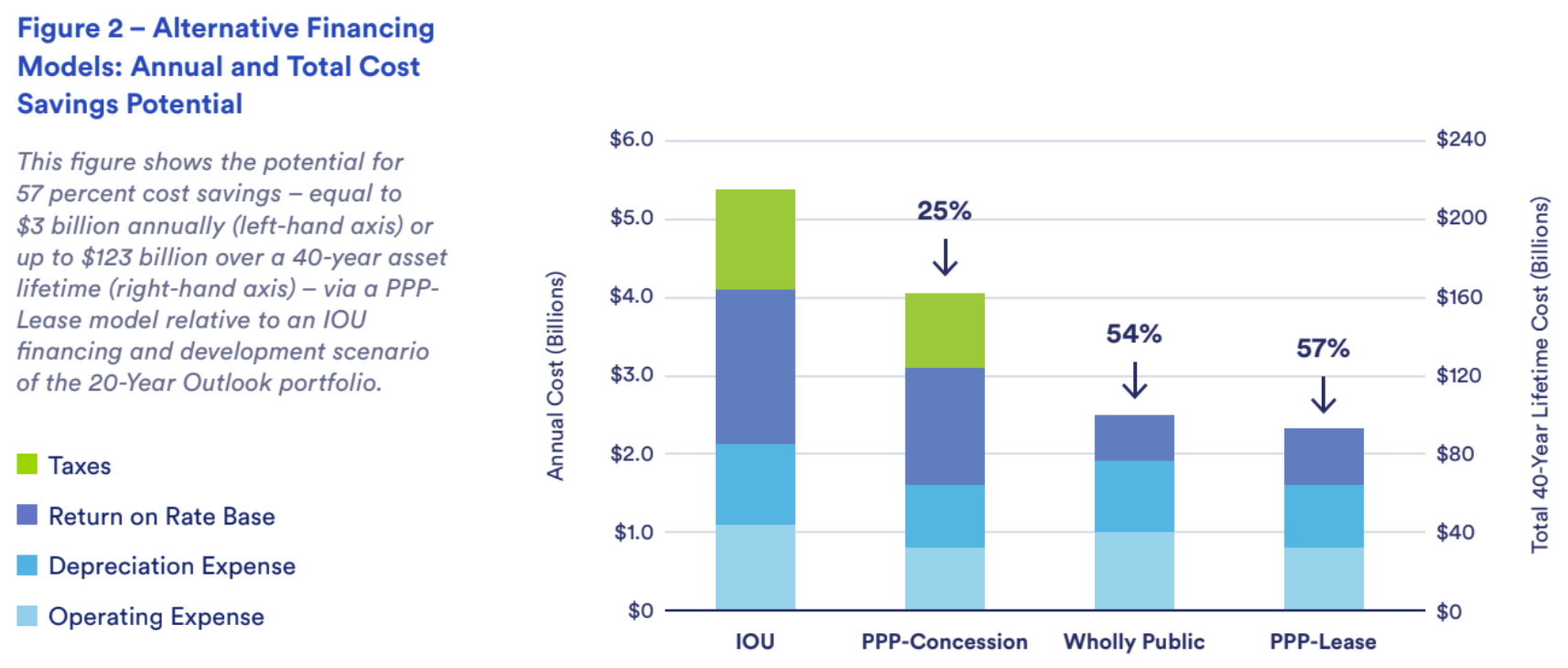
Figure 5: Summary of the customer savings potential for building new transmission under alternative models. Applying public financing and ownership in combination with private sector operations (far-right chart) to only a portion of new transmission yields billion in annual savings. Source: Net-Zero California, Clean Air Task Force, DHInfrastructure, UC Berkeley Center for Law, Energy and the Environment
5. Wildfire prevention
Wildfire is arguably the state's most challenging environmental problem, driving significant electricity rate increases, public health impacts, community displacement, and carbon emissions. Multiple reports and state policies have clearly identified how to solve the problem: the state must facilitate an unprecedented ramp-up in prevention efforts in the form of hardening homes and establishing defensible space in the wildland-urban interface and performing thinning and prescribed burns in forests. The obstacle? These interventions are expensive, likely costing $6-8B per year for the foreseeable future. For reference, this is roughly equal to the entire annual state natural resources budget, and is more than the entirety of the GGRF. New and sustainable funding sources to help pay for wildfire prevention are the critical need.
State leaders could advance two promising options in 2026. First, is to address the state's presently lop-sided wildfire expenditure paradigm, which emphasizes firefighting (state) and electric infrastructure ignition reduction (IOUs) instead of actions that are more optimal for reducing the risk of damages, such as WUI hardening and landscape-scale forest treatments. Stanford researchers recently determined that more than $10B is spent annually on the former two actions – a significant amount – while only $500M is spent on wildfire prevention (Figure 6). Although it is no small feat to unravel this paradigm, one approach could be to establish a pilot program that aims to pool funding for the implementation of regional wildfire prevention plans based upon expected benefits. This is similar to cost-sharing models for water (e.g., Forest Resilience Bond) and could occur in three broad steps:
Step 1: Develop a wildfire mitigation plan for a high-risk region, including identifying the various home hardening, defensible space, forest treatments, grid hardening, and other mitigation strategies;
Step 2: Quantify the benefits (i.e. avoided damages, avoided suppression costs, avoided IOU liability, etc.) associated with implementation of the plan for relevant parties (or "beneficiaries"), including state and local governments, utilities, insurers, and others;
Step 3: Establish a shared fund that stakeholders pay into based upon their expected benefits.
As pilots are established, it should be the case that the current (generally speaking) suppression-first paradigm is progressively replaced with a prevention-first paradigm – which is expected to be significantly more cost-effective for stakeholders. The state could play a lead role in helping to convene IOUs, who could benefit from this approach, but would need to specify what risks or other exposures they may face, if any, from investing shareholder and/or ratepayer funds in this new way.
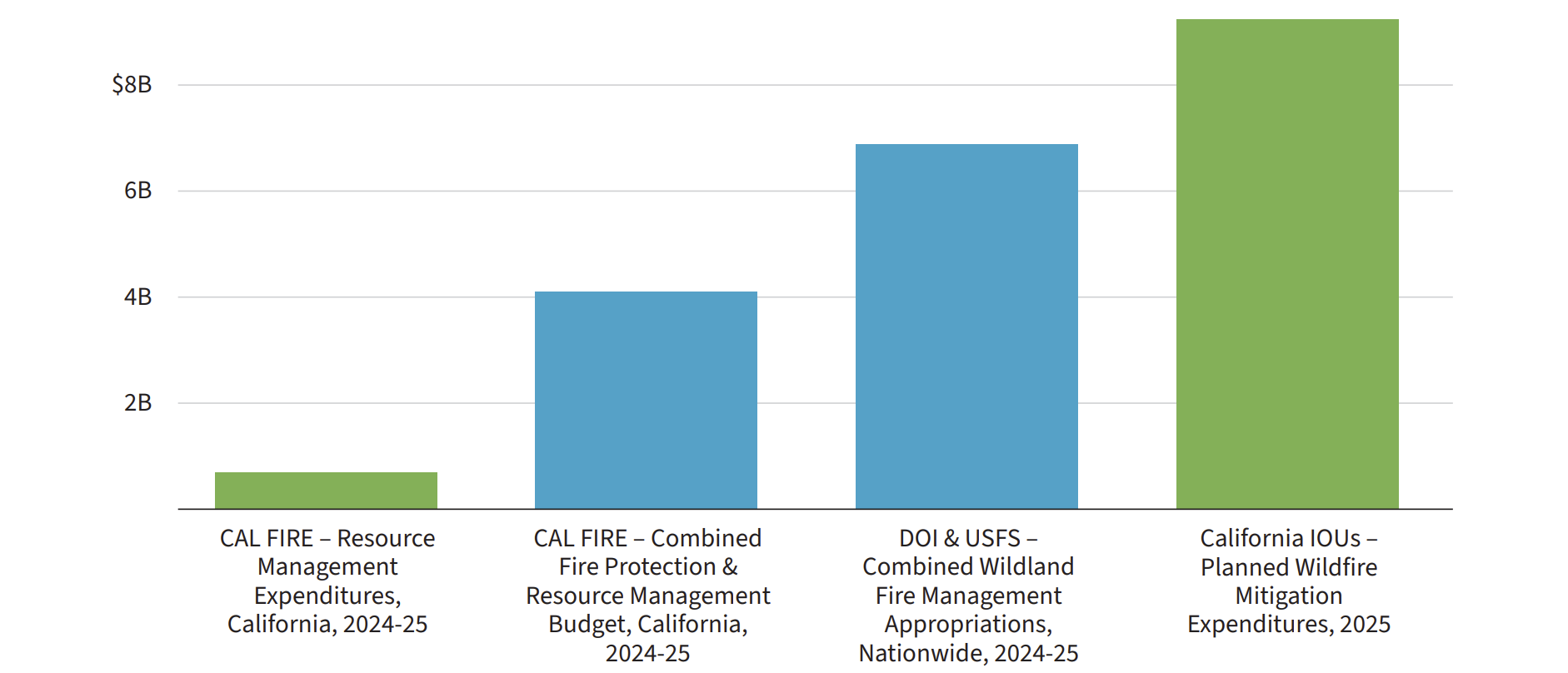
Figure 6: Summary of state wildfire prevention ("resource management") expenditures at roughly $500M per year, while suppression ("fire protection") and IOU expenditures are well over $10B per year. Source: Stanford
A second key option is for the state to facilitate a sustainable forest bioeconomy that converts residues from forest treatments into clean products, such as renewable natural gas, hydrogen, building materials, and carbon removal. As background, the state has established a goal to treat up to 2.3 million acres of forest each year to reduce wildfire risk. This is estimated to result in tens of millions of tons of wood waste that, at present, are primarily open burned or left to decay in piles – emitting substantial carbon and air pollution. A strategy to collect and convert these residues into clean products would not only avoid these negative impacts but could spur major economic opportunity in rural and tribal areas via a new advanced manufacturing ecosystem that generates tens of thousands of high-road jobs.
California has made limited progress on biomass for many years, forcing local governments to contemplate strategies such as exporting wood waste from the Sierras to be burned for electricity in the UK – with this being seen as the only viable option to improve public safety in their communities. However, a suite of low-cost reforms could establish the conditions for a sustainable and innovative wood waste economy to take root in the state. At a minimum, these would address what have been identified as the two core obstacles, including: (i) the inability to obtain reliable feedstock supply from public and non-industrial private lands (85% of California's forests); and (ii) the inability to obtain revenue incentives for clean products due to a lack of state guidance related to the lifecycle emissions from alternative uses of forest biomass. Additional policies that could be considered include establishing centralized biomass innovation hubs to drive early-stage industry development on a regional basis. A short calculation shows how an advanced bioeconomy, if unlocked, could support forest treatments at scale (Figure 7). For more information, see Addressing California's wood waste crisis and Reflections on the inaugural California Biomass Workshop.
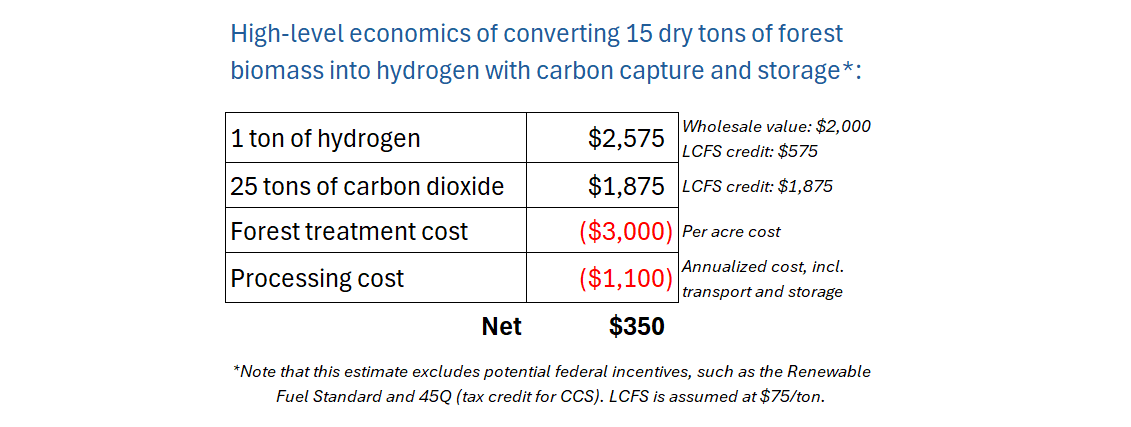
Figure 7: Basic techno-economic estimate of a carbon-negative hydrogen facility. The higher value of innovative products such as a clean fuel, coupled with carbon capture and storage, allows for a substantial improvement in the economics as compared to current options such as large-scale direct combustion.
6. Carbon removal
Carbon removal has been identified by both the Governor and CARB as a key technology for achieving the state's climate goals.[3] Specifically, it is estimated to provide 100 Mt of mitigation, or roughly 25% of the state's total solution for achieving net-zero emissions by 2045. Currently, there are no large-scale carbon removal projects operating in the state. Recent legislation has sought to remove key obstacles to development, including lifting the moratorium on CO2 pipelines (SB 614, Stern & Petrie-Norris) and prior to that by directing CARB to establish a foundational regulatory framework (SB 905, Caballero). However, a key question is: following the implementation of these policies over the next 12-months, should we expect a rapid proliferation of carbon removal projects consistent with the state’s goals? The answer is no – because while these policies are important, they do not provide incentives to expedite infrastructure deployment, including common carrier pipelines and geologic storage. Without available infrastructure to provide an offtake, prospective capture entities (e.g., cement, biofuels plants) will continue to be challenged to execute a final investment decision on projects (Figure 8).
If California is serious about achieving its carbon removal goals, it should begin a process of developing a strategy or model to de-risk and incentivize key infrastructure development. One approach to consider is that adopted in the UK. Specifically, recognizing the need for an "infrastructure-push" to catalyze carbon removal, and also being wary of the risk of asset monopolization in the event that only a handful of incumbents own infrastructure, the UK Department of Energy Security and Net-Zero established a model whereby transport and storage operators are regulated utilities – not dissimilar to the power sector. As regulated utilities, they earn a low – but guaranteed – return based upon their infrastructure investments and performance against agreed upon milestones with (in their case) federal government. Overall, this provides an incentive to develop projects quickly and is helping to stimulate capture development, as these upstream entities have greater confidence in their potential of securing a reliable offtake at a sufficiently low-cost to justify their own project investment. Although the UK has adopted this specific model, it should be noted that other forms of public-private partnership could also be adopted to expedite key infrastructure development. In 2026, policymakers could consider options and establish a process for developing a carbon infrastructure strategy in California.
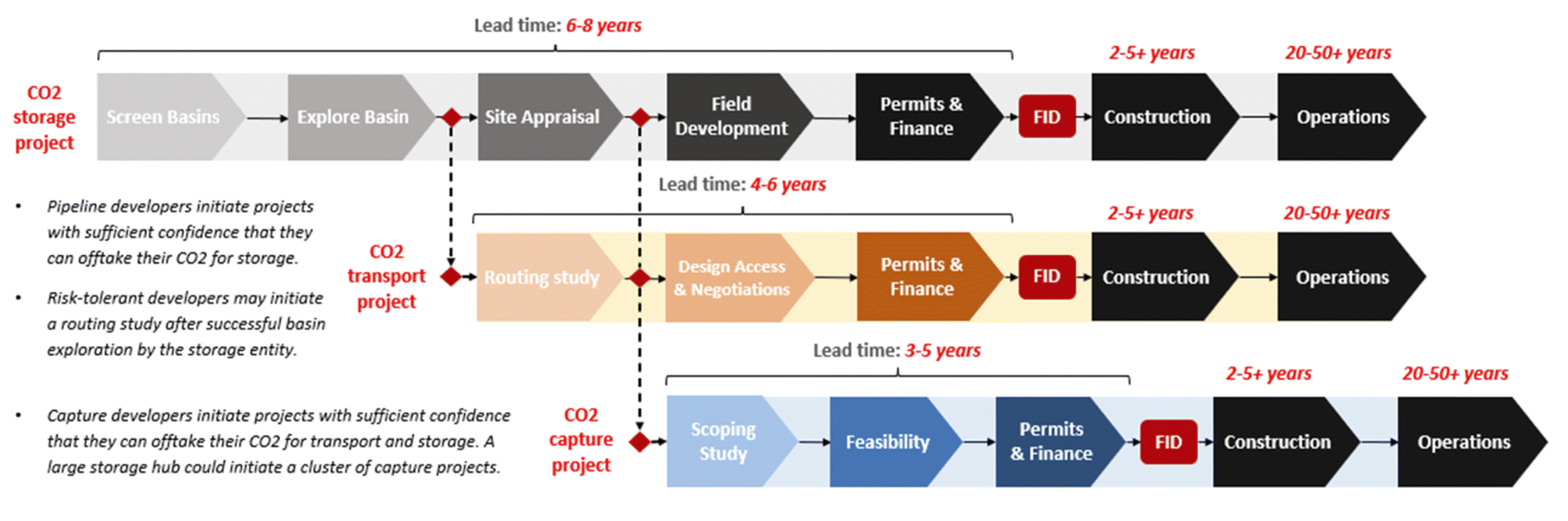
Figure 8: This diagram summarizes the "coordination" or "chicken-or-egg" problem that affects carbon removal. Specifically, it shows how end-to-end carbon removal requires coordinating three separate projects. A capture project (blue) is unlikely to initiate without sufficient confidence in transport (orange) and storage (grey) development. A capture project is highly unlikely to execute an investment decision without a guaranteed offtake for their CO2. Source: Uden, Socolow and Greig.
Conclusion
California has established a robust model for climate progress – showing that it's possible to grow the economy while achieving steady emissions reductions. It is notable that in recent years this model has stood up through a pandemic, geopolitical shocks to energy supply, and now a federal government that is actively targeting the state's programs. Very few other subnational governments – and even national governments – have maintained this level of climate progress over the same period.
However, it is also the case that our ambitious goals are in jeopardy unless we continue to find ways to achieve greater emissions reductions. The goal of this analysis is to highlight that there is no shortage of opportunity – even in the midst of a significant budget deficit. Permit reform, data centers, cap-and-invest and the GGRF, public financing of transmission, wildfire prevention, and carbon removal, are all key issues with significant scope for progress. California policymakers achieved a landmark year on climate and clean energy issues last year – and there is no reason they cannot do the same again.
* * *
[1] California has reduced emissions 16% in 10-years = 1.6% per year. To deliver the remaining 24% in five years = 24% / 5 = 4.8% per year. 1.6% * 3 = 4.8%, i.e. three-times as fast as the previous decade, on average.
[2] Note that this is arguably an underestimate of the upper bound, as: a) the reference capital costs (CAISO's 20-Year Transmission Outlook) exclude right-of-way acquisition costs, which are likely to be substantial; and b) the study does not include savings that would come from reducing lead times to project development, where pre-investment development phases are estimated to account for roughly 20% of total project costs.
[3] "Carbon removal" here is used as a collective reference to both point-source capture at industrial and biofuels facilities as well as direct air capture with geologic storage.